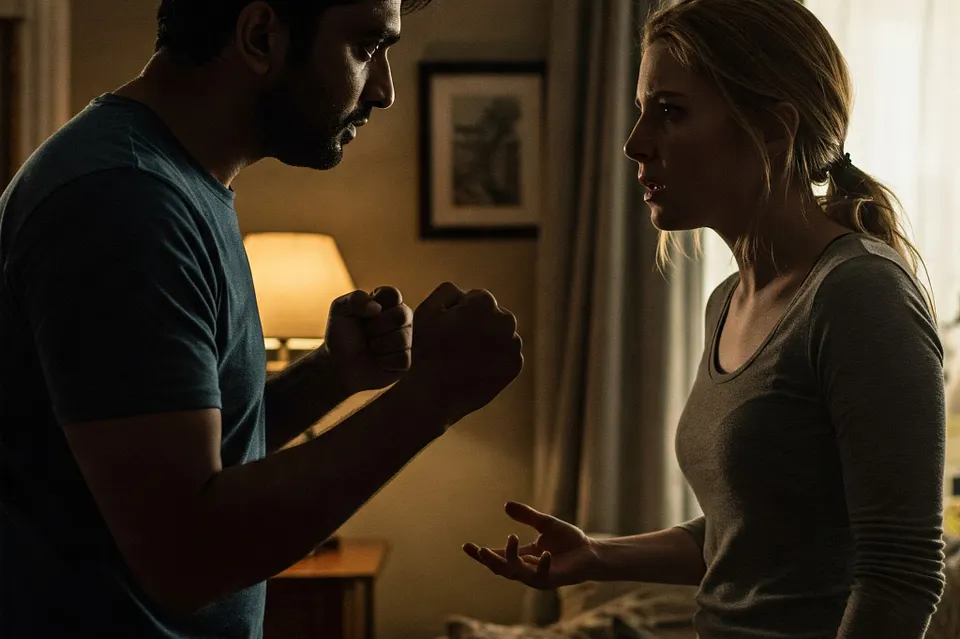

We had been playing what began as a friendly game of golf. My son and I were on a team against two important men in our life. Men we love, to honor them, let’s call them Scott and Chris. A small amount of money was on the line, and they made what I knew was a foolish bet. My game had improved, and I was confident in my ability. We had handily won the game, and now we were on the 18th tee box, and Scott made the decision to press, which meant letting the whole bet ride double or nothing on the last hole performance. At this point, his ego was bruised, and he compensated for it by saying that my performance was a fluke, along with a barrage of belittling remarks and attacks. Defensive, I exclaimed, “That’s a bunch of shit if I’ve ever heard anything.” Instead of brushing off the psychological attack, I went on the offensive. I would not be bullied; instead, I’d become the bully. The conflict escalated, but I made sure I had the upper hand. The verbal exchange grew more heated and more personal. I wasn’t going to back down. I made a par on the hole, and he didn’t even finish. He stormed off the course, threw his clubs in the back of his truck, and drove off. Justified and victorious, I walked off the green and back into reality. As the adrenaline wore off and reflection set in, I realized nobody had won. We all had lost something during that last hole. My son had lost some innocence and respect for me and for Scott. Chris was put in an impossible position between me and his lifelong friend. He was made to choose sides and lost a relationship by choosing mine, as they haven’t spoken since. I lost my dignity and self-control as I was transported back to the trauma-filled fourth-grade playground where Thane, the school bully, ruled using fear and force.
Playground dynamics can rule our reactions to many different scenarios in our day-to-day lives. How we react to being bullied, handle conflict, deal with competition, or use imagination can all be affected by our experience on the playground.
According to Jim Murphy, author of Inner Excellence, our freedom to play like a kid, curiously exploring possibilities, excited for challenges that may arise is one of the most important determining factors for our performance.
As children, we learn an incredible amount about ourselves and how to interact with the world in the arena of play. It doesn’t have to be the school playground; it could be the park or the basement, where we form the scripts and narratives our brain unconsciously follows when navigating complex situations.
My bully, Thane, had trained me that when an attack is imminent, my best course of action is to go on the offensive. My most vivid memory of fourth grade was on the court, where my friends and I were playing kickball. I had caught sight of Thane approaching. I already knew what was going to happen. So, instead of letting that take place, I turned and kicked that ball as hard as I could directly at Thane and hit him square in the stomach, knocking the wind out of him. I then proceeded to jump on Thanes’ back and let fists fly. I had had enough. I would be bullied no more.
A tear runs down my cheek as I recount these events, and I grieve for that little boy who was unprotected and had to suffer such terrorism, so much so that he would resort to violence before an attack even occurred. Given the menu of reactions: fight, flight, or freeze, my subconscious learned that when being bullied is even a possibility, a rapid launch into a war works best.
Retrospectively, the conflict on the golf course seems like it should’ve been insignificant. I should’ve brushed it off, let my performance speak for itself, and let the relationship be more important than winning. I could have shown resilience and maturity in character and loved my enemy in that moment, as Jesus would have done. Dallas Willard says spiritual maturity is best measured by one’s spontaneous reaction to love one’s enemy. Judging by this incident, I have a long way to go, but I realize I found myself back on the playground in those moments.
Think of what the arena play was like for you as a child. Can you name your bully? Was it a safe space where imagination and acceptance ruled? Or was it a gauntlet where the weak were trampled, and vigilance or violence was required to survive? What are some playground dynamics that play out in your world now?
Identifying these dynamics and the stories behind them within ourselves allows us to recognize specific triggers and respond instead of reacting. It also gives us a chance to grieve for our younger selves and bring comfort, safety, and support to that younger version of us. This is a form of confession. It speaks the truth about our story and opens up the opportunity for repentance, a chance to go in a different direction. The neuropathway our brain follows in our reaction can be healed, enabling us to do something different. God’s grace and forgiveness always follow confession and repentance so we can be released from the guilt and shame of the damage done in our reactionary times.